
MBC 2 Frequency 2026 TP TV Channel New Today
Last Updated: Loading…
Home Satellites TV Channels Receiver Software Biss Keys Dish Setting Contact
Daily Updated Frequencies

Complete Satellite
Frequency Guide

The most comprehensive satellite TV channel frequency database for Pakistan and worldwide. Find transponder details, dish settings, receiver software, and Biss keys — all in one place.

Live Frequency Data
PTV Sports 11785 H 27500 KU
Geo News 11900 V 27500 KU
ARY Digital 11785 H 27500 KU
Hum TV 3965 H 4333 C
Express News 11919 V 27500 KU

MBC 2

mbc-2-logo

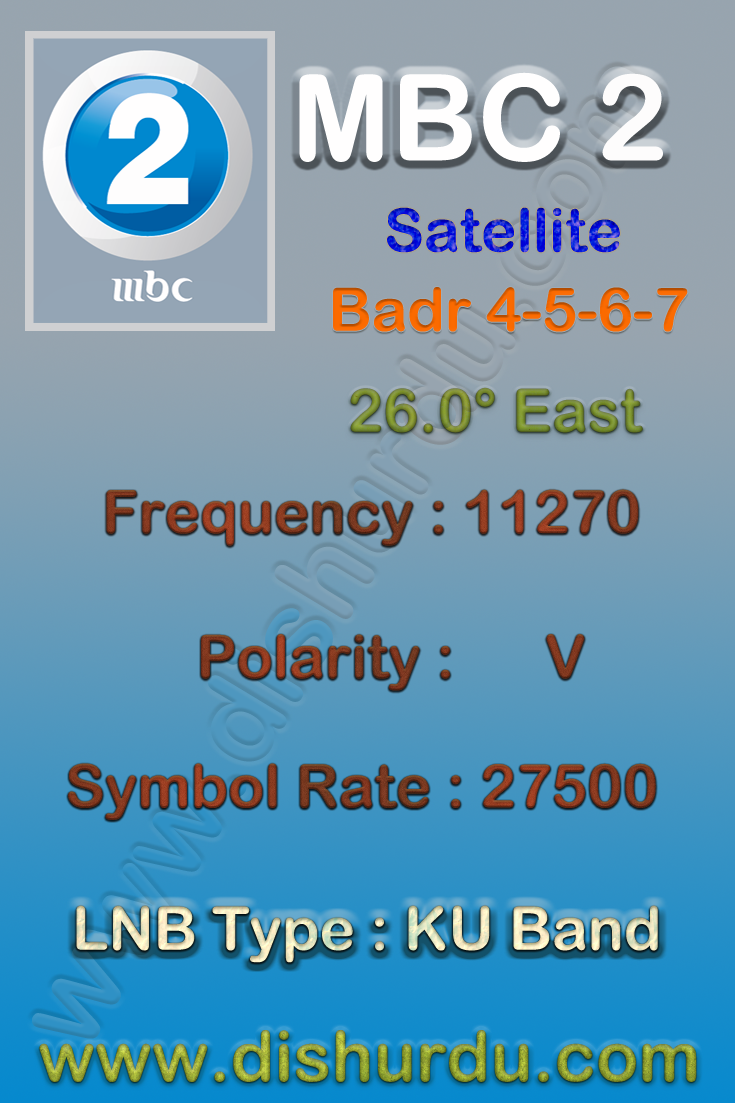
1: MBC 2 Frequency Badr 26 East

2: MBC 2 Satellite Frequency list

3: MBC 2 TP

4: MBC 2 Frequency

MBC 2 Frequency Satellite

Badr 4-5-6- 26° E TV channels Frequencies list TP Strong Frequency LNB Type KU Band Updated 08-07-2026

Badr 4-5-6- 26° E TV channels Frequencies list TP Strong Frequency LNB Type KU Band Updated 08-07-2026


Channel Name

Frequency
Polarity

Symbol Rate
Frequency

V-PID

SID

System
Encryption

ONID-TID
C/N lock
APID Lang

MBC Package

11270 V

27500 5/6


DVB-S/MPEG-2
702-7104


HSE

11270 V

27500 5/6

410

-

MPEG-2

610

Shopping 3

11270 V

27500 5/6

412

-

MPEG-2

612

MBC 1

11270 V

27500 5/6

402

1

MPEG-2

602 Ara

MBC 4

11270 V

27500 5/6

405

2

MPEG-2

605 Ara

MBC Drama

11270 V

27500 5/6

428

3

MPEG-2

628 Ara

MBC Bollywood

11270 V

27500 5/6

401

4

MPEG-2

601 Ara

MBC 2

11270 V

27500 5/6

403

5

MPEG-2

603 Ara

MBC Action

11270 V

27500 5/6

406

6

MPEG-2

606 Org

MBC Max

11270 V

27500 5/6

408

7

MPEG-2

608 Ara

MBC 3

11270 V

27500 5/6

404

8

MPEG-2

604 Ara

Citruss TV

11270 V

27500 5/6

416

9

MPEG-2

616 Ara

Wanasah

11270 V

27500 5/6

414

10

MPEG-2

614 Ara

Al Arabiya

11270 V

27500 5/6

427

11

BISS

627 Ara

MBC Maser

11270 V

27500 5/6

430

57

BISS

707 Ara

MBC Maser 2

11270 V

27500 5/6

431

58

BISS

708 Ara

-R- MBC FM

11270 V

27500 5/6

Radio

52

MPEG-2

702 Ara

-R- Panorama FM

11270 V

27500 5/6

Radio

54

MPEG-2

704 Ara

-R- AA FM

11270 V

27500 5/6

Radio

55

MPEG-2

705 Ara

Badr 4-5-6- 26° E TV channels Frequencies list TP Strong Frequency LNB Type KU Band Updated 08-07-2026

Badr 4-5-6- 26° E TV channels Frequencies list TP Strong Frequency LNB Type KU Band Updated 08-07-2026

Other Satellite links for more details TV channels

Strong TP Frequencies Strong TP All Satellite list KU Band LNB

ST 2 Satellite Frequencies Strong TP TV Channels list

Apstar 7 Satellite 76.5° Easst Frequencies and TV Channels list details

Paksat 38.0° paksat-1r East Pakistani TV Channels Frequencies List Strong TP

Asiasat 7 Satellite 105.5° East TV Channel List Indian and Pakistani News TV Channels Frequency Stong TP

Apstar 7 Satellite 76.5° East TV Channels list Strong TP Frequencies

YahSat Satellite 52.5° East KU Band LNB SD and HD free TV channels details Strong TP Frequency

>

badr-4-5-6 KU Band Strong TP

badr-4-5-6 KU Band LNB strong TP Frequency IRIB TV Network TP Frequency Badr satellite IRIB, IRIB TV 1, IRIB TV 2, IRIB TV 3 Encrypted with Biss key During Match
mbc-2-frequency

MBC 2 LNB Frequency KU

MBC 2 on badr-4-5-6 26.0° East KU Band Type LNB Frequency Universal

LNB Type: Universal

First Frequency: 9750

Second Frequency: 10600

Badr C Band LNB Frequency

badr-4-5-6 26.0° East C Band Type LNB Frequency Standard

Mbc 2 Setup Guide

Featured snippet answer: Mbc 2 is a DishUrdu reference page for satellite TV users who need clear channel frequency guidance, receiver tuning help, dish setting notes and quick setup reminders. Use the available table data with your receiver menu and verify the active signal before saving channels.

Table of Contents

Quick Setup Guide

This page is written in a simple, user-friendly style for dish antenna and STB users. When you tune a satellite channel, open the installation menu on your receiver, choose the correct satellite name or orbital position, set the correct LNB type, and then enter the channel frequency details carefully. The most important values for a normal user are channel name, frequency, polarity and symbol rate.

For Ku Band receivers, many users select Universal LNB settings such as 9750/10600. For C Band, many setups use 5150, but the correct value depends on your LNB. If the signal quality is low, check dish direction, LNB skew, cable connector, DiSEqC port and weather condition before changing the saved channel list.

Required Frequency Table Format

When this page is updated with fresh frequency data, the technical table should stay clean and easy to read. Use only these columns: Channel, Frequency, Polarity and Symbol Rate. Extra technical fields should not be added unless they are specifically required later.

ChannelFrequencyPolaritySymbol Rate
Mbc 2Update after manual verificationH / VUpdate after manual verification

Signal and Receiver Help

If a frequency does not scan, do not assume the page is wrong immediately. Satellite channels can move to a new transponder, change symbol rate, become encrypted, or stop temporarily. Run a manual scan first, then try blind scan if the receiver supports it. Keep the dish antenna stable and move it slowly while watching signal quality, not only signal strength.

Before publishing, verify all frequencies manually because satellite channel data can change.

Mbc 2 FAQ

How do I tune this channel or satellite page?

Open your STB installation menu, choose the satellite, enter frequency, polarity and symbol rate, then run manual scan. Save the result only after the receiver locks the signal.

Why is my receiver showing no signal?

No signal can happen because of wrong LNB settings, weak dish alignment, damaged cable, wrong DiSEqC port, rain fade, or an old frequency entry.

Can frequency data change later?

Yes. Satellite TV data changes often, so always verify the latest working frequency manually before publishing or updating a final table.

Which table columns should be used?

Use only Channel, Frequency, Polarity and Symbol Rate for clean user-friendly frequency tables.

Image Placement Suggestion

Add one receiver screenshot or dish antenna image near the first table. Suggested ALT text: mbc-2 frequency receiver setup and dish signal guide.

Internal Links

Useful related pages: Satellite Frequency, Strong TP, Dish Setting, LNB Frequency.

Frequency Verification Note

Before publishing, verify all frequencies manually because satellite channel data can change.


Setup Help

Satellite Frequency Setup Guide

Featured snippet: To scan a satellite channel, confirm the satellite name, enter the correct frequency, polarity and symbol rate, choose the right LNB type, then scan after signal quality is stable.

Quick Checklist

  • Check the channel or satellite name before changing receiver settings.
  • Use the correct LNB type: Universal KU Band for most small dish setups, or C Band for large dish setups.
  • Enter frequency, polarity and symbol rate only when the transponder is active.
  • Use Strong TP for dish alignment before running a full scan.

Recommended Frequency Table Format

Channel / Satellite Frequency Polarity Symbol Rate Band
Use page details above Verify active TP H / V Verify SR KU / C Band

Image Placement and ALT Text

Add a channel logo, satellite beam image or receiver screenshot near the first frequency table where useful. Use descriptive ALT text such as: channel name satellite frequency and dish setting guide.

FAQ

Why is my channel not scanning?

The most common reasons are wrong LNB type, inactive transponder, weak signal quality or an incorrect satellite position.

Should I use blind scan or manual scan?

Use manual scan when you know the exact frequency, polarity and symbol rate. Use blind scan when the receiver list is old or the channel frequency has changed.

Can frequency data change?

Yes. Satellite channels can move to a new transponder, update symbol rate or change encryption status. Always verify before final setup.

Sat Setup Guide

Featured snippet answer: Sat is a DishUrdu reference page for satellite TV users who need clear channel frequency guidance, receiver tuning help, dish setting notes and quick setup reminders. Use the available table data with your receiver menu and verify the active signal before saving channels.

Table of Contents

Quick Setup Guide

This page is written in a simple, user-friendly style for dish antenna and STB users. When you tune a satellite channel, open the installation menu on your receiver, choose the correct satellite name or orbital position, set the correct LNB type, and then enter the channel frequency details carefully. The most important values for a normal user are channel name, frequency, polarity and symbol rate.

For Ku Band receivers, many users select Universal LNB settings such as 9750/10600. For C Band, many setups use 5150, but the correct value depends on your LNB. If the signal quality is low, check dish direction, LNB skew, cable connector, DiSEqC port and weather condition before changing the saved channel list.

Required Frequency Table Format

When this page is updated with fresh frequency data, the technical table should stay clean and easy to read. Use only these columns: Channel, Frequency, Polarity and Symbol Rate. Extra technical fields should not be added unless they are specifically required later.

ChannelFrequencyPolaritySymbol Rate
SatUpdate after manual verificationH / VUpdate after manual verification

Signal and Receiver Help

If a frequency does not scan, do not assume the page is wrong immediately. Satellite channels can move to a new transponder, change symbol rate, become encrypted, or stop temporarily. Run a manual scan first, then try blind scan if the receiver supports it. Keep the dish antenna stable and move it slowly while watching signal quality, not only signal strength.

Before publishing, verify all frequencies manually because satellite channel data can change.

Sat FAQ

How do I tune this channel or satellite page?

Open your STB installation menu, choose the satellite, enter frequency, polarity and symbol rate, then run manual scan. Save the result only after the receiver locks the signal.

Why is my receiver showing no signal?

No signal can happen because of wrong LNB settings, weak dish alignment, damaged cable, wrong DiSEqC port, rain fade, or an old frequency entry.

Can frequency data change later?

Yes. Satellite TV data changes often, so always verify the latest working frequency manually before publishing or updating a final table.

Which table columns should be used?

Use only Channel, Frequency, Polarity and Symbol Rate for clean user-friendly frequency tables.

Image Placement Suggestion

Add one receiver screenshot or dish antenna image near the first table. Suggested ALT text: sat frequency receiver setup and dish signal guide.

Internal Links

Useful related pages: Satellite Frequency, Strong TP, Dish Setting, LNB Frequency.

Frequency Verification Note

Before publishing, verify all frequencies manually because satellite channel data can change.